







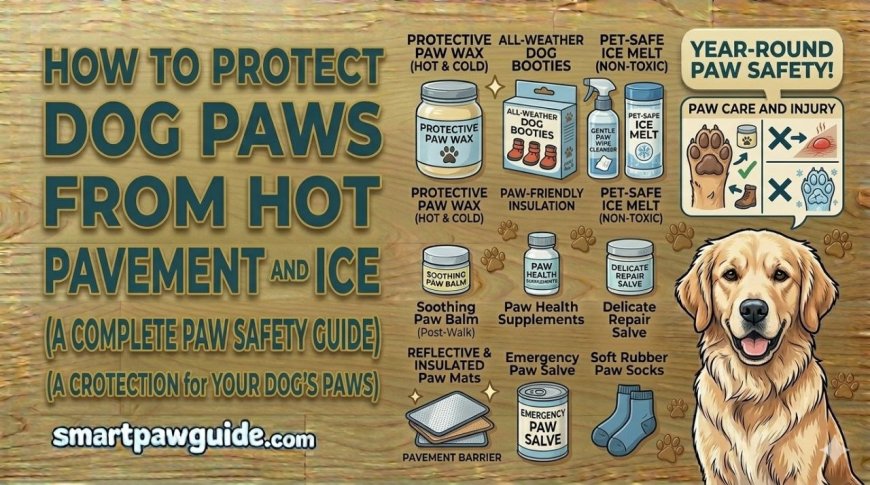
How to Protect Dog Paws from Hot Pavement and Ice
Learn how to protect your dog's paws from hot pavement in summer and ice, snow, and salt in winter. Discover simple paw care tips to keep your dog safe and comfortable year round.

How to Protect Dog Paws from Hot Pavement and Ice
Your dog's paws endure a lot every day. Whether walking on scorching sidewalks in summer or icy streets in winter, paw pads are constantly exposed to harsh conditions. While paw pads are naturally tough, extreme temperatures can still cause injuries, discomfort, and long-term damage.
Understanding how to protect your dog's paws from hot pavement and ice can help prevent painful burns, cracks, and irritation while keeping your dog happy and active throughout the year.
Why Paw Care Is Important
A dog's paw pads serve several important functions:
- Protect bones and joints from impact
- Provide traction while walking
- Help regulate movement on different surfaces
- Protect against rough terrain
Healthy paw pads are essential for your dog's comfort and mobility.
Summer Dangers: Hot Pavement
Many dog owners underestimate how hot pavement can become during warm weather.
Even when the air temperature feels comfortable, asphalt and concrete can absorb heat and become dangerous.
Example:
| Air Temperature | Pavement Temperature |
|---|---|
| 77°F (25°C) | 125°F (52°C) |
| 86°F (30°C) | 135°F (57°C) |
| 95°F (35°C) | 150°F+ (65°C+) |
These temperatures can burn paw pads within minutes.
Signs of Burned Paw Pads
Watch for:
- Limping
- Refusing to walk
- Excessive paw licking
- Redness
- Blisters
- Cracked paw pads
If you notice these symptoms, move your dog to a cool area and seek veterinary advice if needed.
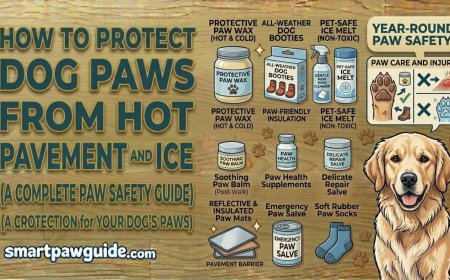
How to Protect Dog Paws from Hot Pavement
1. Walk During Cooler Hours
The safest times are:
- Early morning
- Late evening
Avoid midday walks when surfaces are hottest.
2. Use the Seven-Second Rule
Place the back of your hand on the pavement.
If you cannot comfortably hold it there for seven seconds, it is too hot for your dog's paws.
3. Stay on Grass or Dirt Paths
Whenever possible, choose:
- Grass
- Dirt trails
- Shaded walkways
These surfaces stay cooler than asphalt and concrete.
4. Consider Dog Boots
Protective dog boots create a barrier between paws and hot surfaces.
Benefits include:
- Burn protection
- Reduced irritation
- Increased comfort
Some dogs may need time to adjust to wearing them.
5. Apply Paw Balm
Paw balms help:
- Moisturize paw pads
- Prevent cracking
- Add a layer of protection
Choose products specifically made for dogs.
Winter Dangers: Ice, Snow, and Salt
Winter introduces different paw hazards.
Common risks include:
- Ice buildup
- Snow accumulation
- Road salt
- De-icing chemicals
- Frozen surfaces
These conditions can dry out and damage paw pads.
How Ice Can Harm Dog Paws
Snow and ice often become trapped between the paw pads.
This can cause:
- Pain
- Cracking
- Irritation
- Difficulty walking
Ice balls may also form in dogs with longer fur around their paws.
How Road Salt Affects Dogs
Road salt helps melt ice but can irritate sensitive paws.
Problems include:
- Dryness
- Cracks
- Redness
- Chemical irritation
Dogs may also ingest salt when licking their paws after walks.
How to Protect Dog Paws During Winter
1. Use Protective Boots
Dog boots provide excellent protection against:
- Ice
- Salt
- Cold surfaces
They are one of the most effective winter paw-care solutions.
2. Trim Hair Around Paw Pads
Long fur between the toes can trap snow and ice.
Carefully trimming excess hair helps reduce buildup.
3. Apply Paw Wax or Balm
Protective waxes and balms create a barrier against winter hazards.
They help:
- Reduce dryness
- Prevent cracking
- Protect from salt exposure
4. Clean Paws After Walks
After every winter walk:
- Wipe paws with a damp cloth
- Remove salt and debris
- Dry thoroughly
This simple step prevents many common paw problems.
5. Limit Exposure During Severe Weather
During extreme cold or ice storms:
- Shorten walks
- Increase indoor activities
Your dog's safety should always come first.
Signs of Paw Damage
Inspect your dog's paws regularly.
Look for:
- Cracks
- Swelling
- Redness
- Bleeding
- Limping
- Excessive licking
Early detection can prevent more serious injuries.
Year-Round Paw Care Tips
Healthy paw pads are more resistant to damage.
Helpful habits include:
Check Paws Frequently
Inspect after walks and outdoor activities.
Keep Nails Trimmed
Long nails affect walking and may increase paw stress.
Read our guide on How to Cut Overgrown Dog Nails Without Making Them Bleed.
Maintain Proper Grooming
Regular grooming helps identify problems early.
Keep Skin Healthy
Dry skin can affect paw pads too.
Read How to Fix Dry Skin on Dogs.
Common Mistakes Dog Owners Make
Avoid these common mistakes:
- Walking on hot pavement
- Ignoring winter salt exposure
- Skipping paw inspections
- Using human moisturizers
- Leaving damaged paws untreated
Prevention is always easier than treatment.
Frequently Asked Questions
Can dogs walk on hot pavement?
Yes, but only when the pavement is cool enough. Always perform the seven-second hand test first.
Are dog boots necessary?
Not always, but they can provide valuable protection during extreme weather conditions.
How do I know if my dog's paws are injured?
Watch for limping, licking, redness, cracks, swelling, or visible discomfort.
Is paw balm safe?
Most paw balms designed specifically for dogs are safe when used according to instructions.
Final Thoughts
Knowing how to protect dog paws from hot pavement and ice is an important part of responsible pet ownership.
Simple habits like walking during cooler hours, checking pavement temperatures, cleaning paws after winter walks, and using protective products can help prevent painful injuries.
Healthy paws allow your dog to enjoy outdoor adventures comfortably in every season.
Here are more usefull blogs
- How to Cut Overgrown Dog Nails Without Making Them Bleed
- How to Groom a Dog at Home
- Best Dog Shampoo for Sensitive Itchy Skin
- How Often Should You Bathe a Dog
- Best Dog Nail Clippers for Beginners