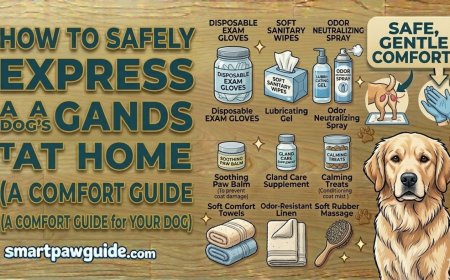
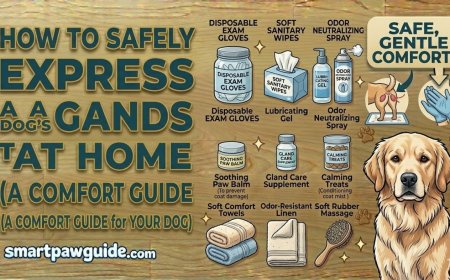

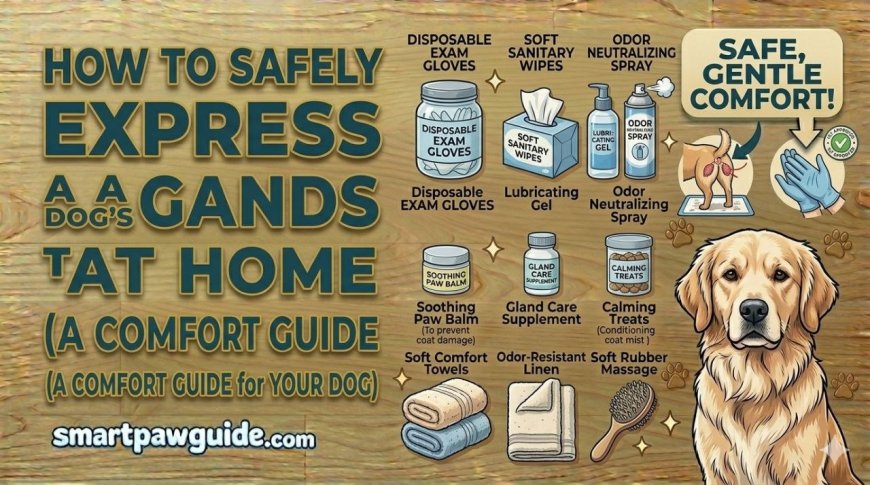
How to Safely Express a Dog's Glands at Home
Learn how to safely express a dog's glands at home, when it may be necessary, warning signs to watch for, and when to seek veterinary assistance.

How to Safely Express a Dog's Glands at Home
Anal gland problems are a common concern among dog owners. While many dogs naturally empty their anal glands during bowel movements, some dogs may occasionally experience discomfort when the glands become full.
Understanding the signs of anal gland issues and knowing when professional help is needed can help keep your dog comfortable and healthy.
This guide explains what anal glands are, common symptoms of gland problems, and important safety considerations for dog owners.
What Are Dog Anal Glands?
Dogs have two small sacs located on either side of the anus.
These glands produce a scent-marking fluid that is normally released during bowel movements.
In healthy dogs, the glands usually empty naturally without any intervention.
Why Do Anal Glands Become Full?
Several factors may contribute to anal gland problems.
Common causes include:
- Soft stools
- Chronic diarrhea
- Obesity
- Allergies
- Inflammation
- Poor gland drainage
Some breeds appear more prone to recurring anal gland issues than others.
Signs Your Dog May Have Anal Gland Problems
Watch for these common symptoms:
Scooting
Dragging the rear end across the floor is one of the most recognizable signs.
Excessive Licking
Dogs may frequently lick or chew around the tail area.
Unpleasant Odor
A strong fishy smell is often associated with anal gland secretions.
Discomfort While Sitting
Some dogs may appear uncomfortable when sitting down.
Swelling or Redness
Visible swelling near the anus may indicate a more serious issue.
Can You Express a Dog's Glands at Home?
Some dog owners choose to learn how to express anal glands at home. However, it is important to understand that improper gland expression can cause:
- Pain
- Injury
- Infection
- Inflammation
- Damage to surrounding tissue
For this reason, many veterinarians and professional groomers recommend having anal gland expression performed by trained professionals, especially if you have never done it before.
When You Should Not Attempt Home Expression
Do not attempt gland expression if your dog has:
- Bleeding
- Severe swelling
- Signs of infection
- Extreme pain
- Open wounds
- Pus or discharge
These symptoms require veterinary attention.
Safer Alternatives Before Considering Expression
Many mild gland issues may improve with supportive care.
Helpful measures include:
Improving Stool Quality
Firm stools help naturally empty the glands.
A veterinarian may recommend dietary changes when appropriate.
Maintaining a Healthy Weight
Excess weight can increase the risk of gland problems.
Regular Exercise
Exercise supports overall digestive health and healthy bowel movements.
Routine Veterinary Checkups
Early detection often prevents more serious complications.
When to Contact a Veterinarian
Seek veterinary advice if:
- Scooting continues for several days
- Symptoms repeatedly return
- Your dog seems uncomfortable
- You notice swelling or redness
- There is a strong persistent odor
A veterinarian can determine whether anal glands are truly the cause of the problem.
Common Misconceptions About Anal Glands
Many dog owners believe all dogs need routine gland expression.
In reality:
- Most dogs naturally empty their glands
- Routine expression is not necessary for every dog
- Excessive manual expression may sometimes cause irritation
The goal should always be to support normal gland function whenever possible.
Tips for Preventing Future Anal Gland Issues
You can help reduce the risk of recurring problems by:
- Feeding a balanced diet
- Encouraging regular exercise
- Maintaining healthy body weight
- Monitoring stool quality
- Scheduling routine veterinary visits
Prevention is often easier than treatment.
Frequently Asked Questions
How do I know if my dog's glands are full?
Common signs include scooting, licking the rear area, a fishy odor, and discomfort when sitting.
Do all dogs need their glands expressed?
No. Most dogs empty their anal glands naturally during bowel movements.
Can diet affect anal gland health?
Yes. Firm, healthy stools may help glands empty naturally.
When should I see a vet?
Contact your veterinarian if symptoms are severe, persistent, or accompanied by swelling, bleeding, or signs of infection.
Final Thoughts
Understanding how to safely express a dog's glands at home starts with understanding when it may—or may not—be appropriate. While some owners learn to perform gland expression themselves, improper technique can lead to injury or infection.
For many dogs, maintaining healthy digestion, proper weight, and regular veterinary care is enough to support normal anal gland function.
If your dog shows signs of discomfort or recurring gland problems, consult a veterinarian to determine the safest and most effective treatment plan.
Here are other helpfull blogs