
Best Cure for Dog Bad Breath (Vet-Approved Solutions)
Discover the best cure for dog bad breath with vet-approved solutions. Learn causes, treatments, and easy home remedies to keep your dog’s breath fresh.

Best Cure for Dog Bad Breath (Vet-Approved Solutions)
Bad breath in dogs is a common problem that many pet owners deal with. While it might seem normal, persistent bad breath can be a sign of underlying health issues such as poor dental hygiene, gum disease, or digestive problems.
The good news is that there are effective and safe ways to treat bad breath at home. In this guide, you will learn the best cures for dog bad breath, including simple habits and proven solutions that improve your dog’s oral health.
What Causes Bad Breath in Dogs?
Understanding the cause is the first step to fixing the problem.
Common causes include:
- Plaque and tartar buildup
- Gum disease (gingivitis)
- Food stuck between teeth
- Poor diet
- Digestive issues
- Infections in the mouth
In most cases, bad breath comes from bacteria in the mouth due to poor dental care.
Best Cure for Dog Bad Breath
Here are the most effective ways to fix bad breath and keep your dog’s mouth healthy.
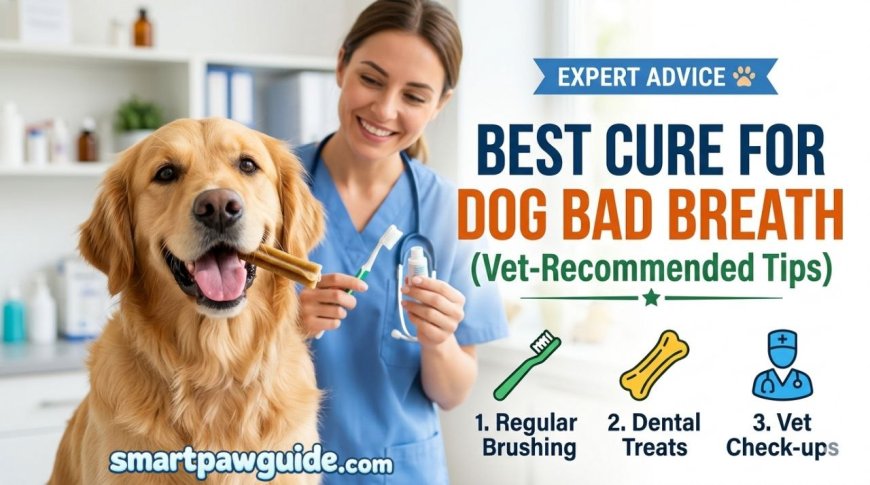
1. Brush Your Dog’s Teeth Regularly
The most effective cure for bad breath is brushing your dog’s teeth.
- Brush 2–3 times per week (daily is best)
- Use dog-safe toothpaste
- Focus on the gum line
If you don’t know how to do this properly, follow our guide on how to clean your dog’s teeth at home.
Regular brushing removes plaque and prevents bacteria buildup.
2. Use Dental Chews
Dental chews help clean teeth while your dog enjoys a treat.
Benefits include:
- Reducing plaque buildup
- Freshening breath
- Supporting gum health
Choose high-quality chews designed for dental care.
3. Provide Dental Toys
Chewing is a natural way for dogs to clean their teeth.
Dental toys help:
- Scrape off plaque
- Strengthen gums
- Reduce boredom
Use safe, durable toys suitable for your dog’s size.
4. Improve Your Dog’s Diet
Diet plays a major role in your dog’s breath.
To improve it:
- Feed high-quality dog food
- Avoid excessive table scraps
- Provide crunchy food when possible
Healthy food supports better oral hygiene and digestion.
5. Use Water Additives
Water additives are an easy way to reduce bad breath.
They work by:
- Killing bacteria in the mouth
- Freshening breath
- Supporting oral hygiene
Simply add the recommended amount to your dog’s drinking water.
6. Clean Your Dog’s Mouth Naturally
Some natural methods can help improve breath.
Options include:
- Coconut oil (small amounts)
- Parsley (natural deodorizer)
- Dog-safe herbal rinses
These can support dental care but should not replace brushing.
Signs Bad Breath Is a Serious Problem
Sometimes bad breath is more than just a hygiene issue.
Watch for:
- Extremely strong or unusual odor
- Bleeding gums
- Loose teeth
- Difficulty eating
- Swelling in the mouth
These may indicate dental disease or infection.
When to See a Veterinarian
You should seek professional help if:
- Bad breath does not improve with cleaning
- Your dog shows signs of pain
- There is heavy tartar buildup
- You notice gum disease
A veterinarian can perform professional dental cleaning if needed.
How to Prevent Dog Bad Breath
Prevention is easier than treatment.
To keep your dog’s breath fresh:
- Brush teeth regularly
- Provide dental chews and toys
- Maintain a healthy diet
- Schedule regular checkups
- Keep a consistent hygiene routine
Small daily habits make a big difference.
Final Thoughts
The best cure for dog bad breath is a combination of proper dental care, a healthy diet, and regular grooming habits. In most cases, brushing your dog’s teeth and maintaining oral hygiene will significantly improve breath and overall health.
By following these vet-approved solutions, you can keep your dog’s mouth clean, reduce odor, and prevent future dental problems.
Here are other helpfull blogs