






How to Safely Clean Around Dog Eyes Without Irritation
Step-by-step home guide for cleaning dog eye crust and discharge safely. Learn which solutions to use, proper wiping methods, and when to consult a vet.
How to Safely Clean Around Your Dog's Eyes Without Irritation
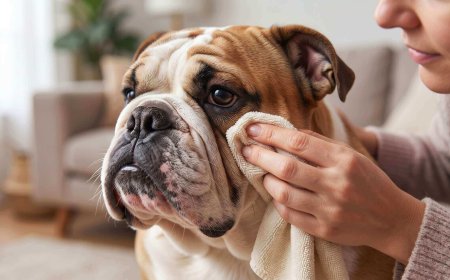
Waking up with dry crust or mild clear discharge in the corners of the eyes is completely normal for most dogs. For breeds with prominent, round eyes or flat facial profiles, keeping the eye contour clean requires regular attention to prevent staining, odor, and skin irritation. Understanding basic daily maintenance is just as important as knowing how to clean a dog's wrinkles to prevent trapped bacteria.
Because the ocular surface is exceptionally delicate, routine facial hygiene must be handled with the proper supplies and gentle, patient technique. Here is a safe, stress-free routine for cleaning around your dog's eyes at home.
Supplies to Use (and What to Avoid)
Before touching your dog's face, ensure you have the proper supplies assembled on a clean surface:
- Safe to use: Plain sterile saline solution (0.9% sodium chloride without preservatives), lukewarm tap water, lint-free medical gauze pads, or soft microfiber washcloths.
- Never use: Human eye drops, human baby wipes, chemical makeup removers, or standard cotton balls. Loose cotton fibers easily fray, stick to the eyeball, and can cause painful corneal scratches.
Step-by-Step Eye Cleaning Protocol
Step 1: Soften the Dried Debris First
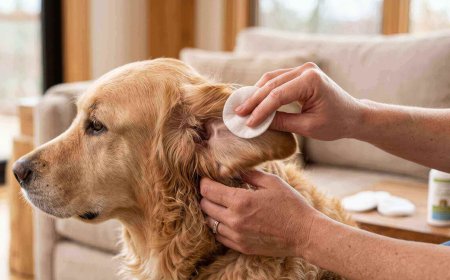
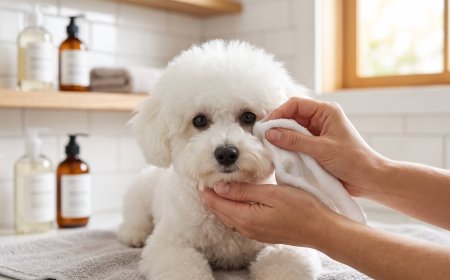
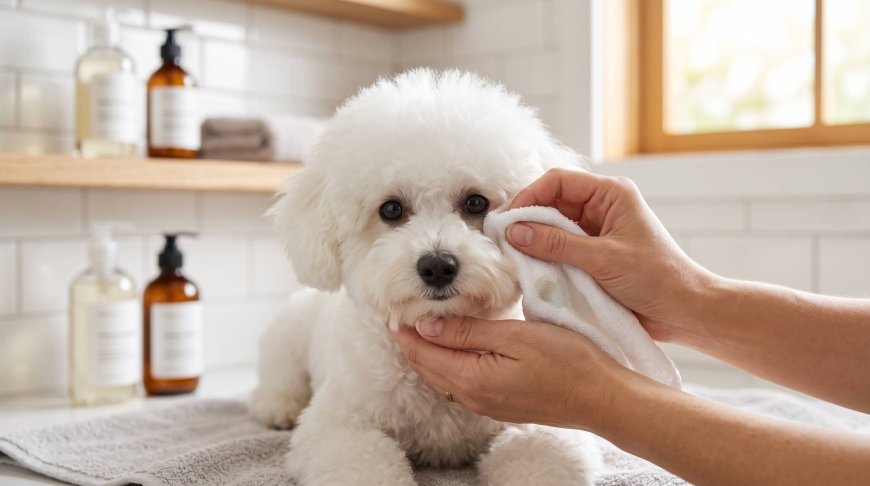
Never attempt to pick or pull dry crust off your dog's facial hair. Pulling dry debris yanks the sensitive skin beneath, causes immediate pain, and makes your dog fearful of future face handling. Instead, thoroughly soak a lint-free gauze pad in lukewarm sterile saline. Hold the damp compress gently against the crusty corner of the eye for 30 to 60 seconds to soften the matter.
Step 2: Wipe Smoothly Outward
Once the debris has softened, gently wipe away from the eye. Move from the inner corner near the nose, downward and outward along the facial fur. Use a clean section of the cloth or a fresh gauze pad for each stroke so you do not spread bacteria back toward the eye.
Step 3: Clear the Fur with a Fine Comb
For breeds with long facial hair, run a fine-toothed metal flea or face comb gently through the damp fur directly beneath the eye. This lifts out softened discharge without pulling the skin. For small white breeds prone to heavy reddish-brown buildup, pair this daily wipe-down with our guide on how to remove dog tear stains safely.
Step 4: Pat the Skin Completely Dry
Moisture trapped in facial hair and skin folds creates an ideal breeding ground for red yeast and bacterial dermatitis. Finish the routine by gently blotting the fur around the eyes with a clean, dry cloth.
Warning Signs: When to See a Veterinarian
Routine cleaning is designed strictly for clear, normal daily eye discharge and dust. Discontinue home cleaning and seek a veterinary evaluation immediately if you notice any of the following symptoms:
- Thick yellow, green, or cloudy discharge
- Squinting, blinking repeatedly, or keeping one eye closed
- Redness, swelling, or puffiness in the conjunctival tissue
- A cloudy, hazy, or bluish film covering the cornea
- Frequent pawing or rubbing of the face against furniture
Frequently Asked Questions (FAQ)
Can I use human saline solution for my dog's eyes?
Yes, provided it is plain, preservative-free sterile saline (0.9% sodium chloride). Avoid contact lens multi-purpose solutions, as they contain disinfectants and cleaning agents that can irritate a dog's eye tissues.
How often should I clean around my dog's eyes?
For dogs with heavy tear production or facial folds, a daily wipe-down every morning is ideal. For short-haired breeds with minimal buildup, cleaning once or twice a week is typically sufficient.
Why is the fur under my dog's eyes turning reddish-brown?
This discoloration is caused by porphyrins naturally occurring iron-containing molecules excreted in dog tears and saliva. When exposed to light and air, porphyrins oxidize and dye light-colored fur a reddish-brown hue.
Is morning eye crust normal for dogs?
Yes. Small amounts of dried clear or slightly gray mucus in the inner corners upon waking are completely normal and represent the eye's natural way of clearing dust and dead cells.
Related Guides