










How to Brush Your Dog’s Teeth: A Beginner’s Guide
Step-by-step guide to brushing your dog's teeth at home safely. Learn how to introduce canine toothpaste, prevent plaque buildup, and maintain oral health.
How to Brush Your Dog’s Teeth: A Beginner’s Step-by-Step Guide
Dental health is one of the most neglected areas of at-home pet care. Many owners consider bad breath an unavoidable part of owning a dog, but persistent odor is often the earliest sign of plaque and tartar buildup along the gumline. By three years of age, the vast majority of dogs show early signs of periodontal disease, which can lead to tooth decay, discomfort, and systemic health complications over time.
Establishing an at-home dental routine does not require wrestling with your dog or forcing open their jaw. With the proper supplies and a progressive, low-stress method, brushing can easily become a standard, cooperative part of your weekly routine.
Supplies Checklist: What to Prepare
Never use human oral products on your dog. Before beginning, ensure your station has pet-safe dental tools:
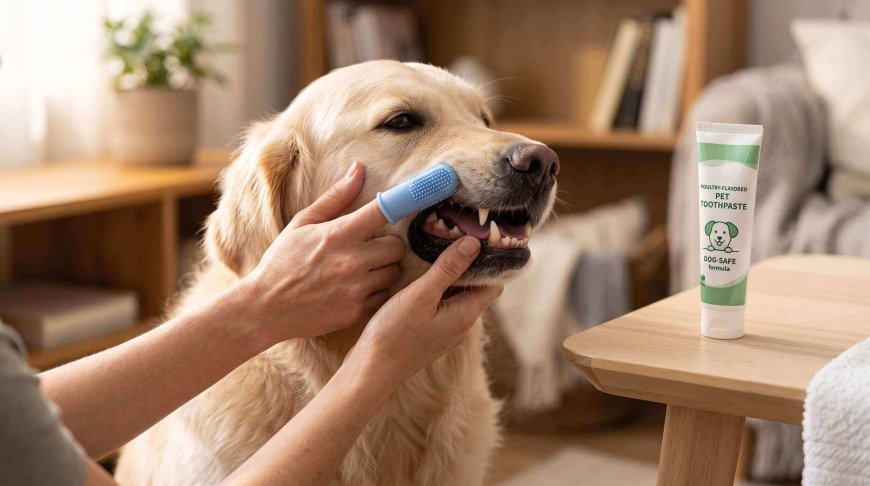
- Enzymatic Dog Toothpaste: Dogs cannot spit, so canine paste is formulated without foaming agents and is safe to swallow. Look for poultry, beef, or peanut flavors to keep the experience enjoyable.
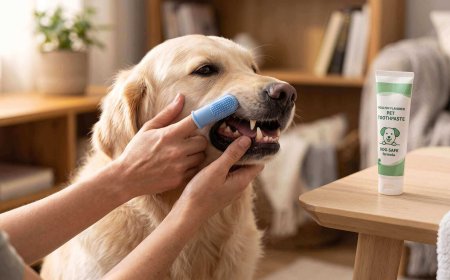
- Silicone Finger Brush or Angled Pet Toothbrush: Finger brushes offer maximum control for puppies and small dogs, while long, angled pet brushes help reach the back molars on large breeds.
- Never Use Human Toothpaste: Human toothpastes contain foaming detergents and sweeteners like xylitol (birch bark extract), which is highly toxic to canines and can cause rapid liver failure.
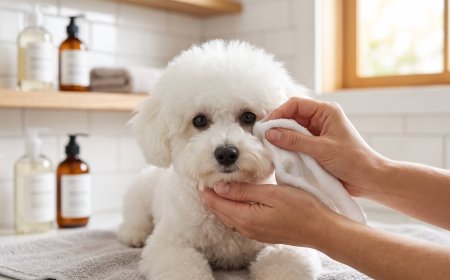
If you are just beginning to build out your hygiene station, reviewing our core instructions on how to clean dog teeth at home will help you identify basic gum health standards.
The 4-Step Training & Brushing Progression
Step 1: The Flavor Introduction
Place a small dab of enzymatic dog toothpaste on your fingertip and let your dog lick it off naturally. Do not touch their mouth yet. Repeat this once a day for two or three days until your dog eagerly approaches when they see the toothpaste tube.
Step 2: Finger Desensitization Along the Gumline
Once your dog likes the flavor, dab a small amount of paste on your finger. With your dog sitting calmly, gently lift their upper lip with your free hand and run your finger across the front teeth and outer gums for 5 to 10 seconds. Follow immediately with verbal praise and a small reward.
Step 3: Introducing the Brush
Slip a silicone finger brush onto your index finger or place a pea-sized amount of paste onto a soft-bristle pet toothbrush. Gently lift the corner of the lip and position the bristles at a 45-degree angle toward the gumline. Use small, gentle circular motions over the outer surface of the large canines and premolars.
Step 4: Reaching the Back Molars
Most tartar accumulates on the upper cheek teeth (molars and premolars). You do not need to pry your dog's jaw open to reach them; the dog's abrasive tongue naturally helps clean the inner surfaces of their teeth. Focus your brushing efforts on the outer surfaces facing the cheeks, where saliva cannot easily flush away food debris.
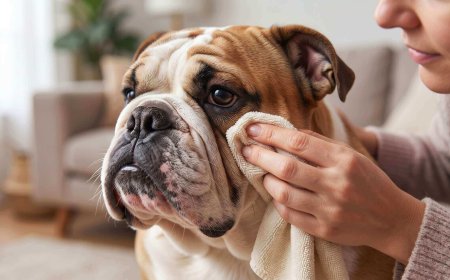
Dental hygiene works hand in hand with other routine facial care. For example, keeping the mouth and face clean pairs naturally with knowing how to clean a dog's wrinkles to stop moisture and bacteria from causing skin fold irritation around the muzzle.
Signs Your Dog Needs Professional Veterinary Dental Care
Home brushing is designed to prevent new plaque from hardening into calculus; it cannot remove thick, rock-hard tartar that has already formed beneath the gumline. Discontinue home brushing and consult your veterinarian if you observe any of the following symptoms:
- Red, swollen, or bleeding gums when touched
- Cracked, loose, or visibly discolored brown teeth
- Dropping dry kibble, chewing only on one side, or whining while eating
- Excessive drooling with blood-tinged saliva
Frequently Asked Questions (FAQ)
How often should I brush my dog's teeth?
Brushing daily is the gold standard for preventing plaque from mineralizing into tartar. If daily brushing is not feasible, aiming for at least 3 times per week provides noticeable preventative dental benefits.
Do dental chews replace the need for brushing?
No. While veterinary-approved dental chews and water additives can help reduce surface plaque, they do not replace the mechanical friction of bristles sweeping along the gumline where periodontal bacteria live.
Can I use baking soda to brush my dog's teeth?
No. Baking soda has high sodium levels that can disrupt your dog’s electrolyte balance if swallowed, and its alkaline taste often causes pets to resist mouth handling.
Related Guides