


How to Trim a Puppy's First Coat (Age-by-Age Guide)
How to trim a puppy's coat safely at each age and stage - what to trim, what to leave alone, and when it's time for a real haircut.
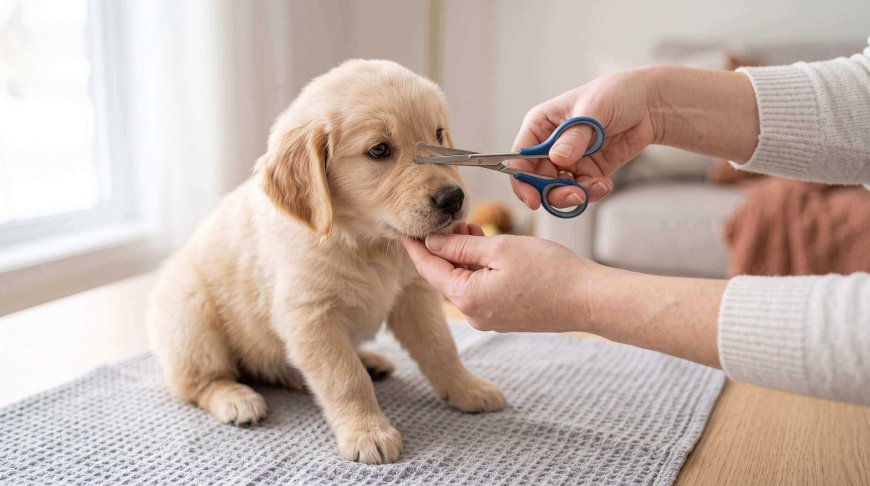
How to Trim a Puppy's First Coat (Age-by-Age Guide)
It's tempting to reach for the scissors the moment your puppy starts looking a little shaggy, but a young coat isn't ready for a full haircut the way an adult dog's is. Trimming too much, too soon - or in the wrong spot - can turn a puppy's first grooming experience into one they remember for the wrong reasons.
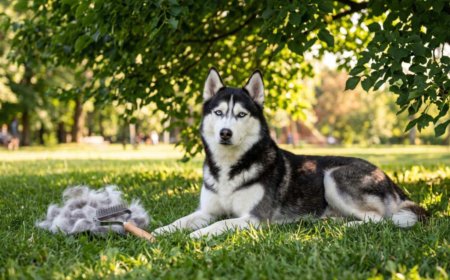
The good news is that early trimming isn't about styling at all. It's about a handful of small, practical trims at the right stage, layered on top of the handling and brushing habits you've already started if you've been following our first-time puppy grooming guide. Get this staged approach right, and by the time the adult coat comes in - whether that means the dense double coat of a Husky or the curlier coat of other breeds - your puppy will already be relaxed around scissors and clippers.
Why Timing Matters More Than Technique
A puppy's coat goes through real structural changes in the first year: soft, single-layer puppy fuzz gradually gives way to a denser adult coat, often starting somewhere between three and six months and continuing well past that depending on breed. Trimming decisions that make sense for an adult coat - shaping, thinning, breed-standard cuts - simply don't apply yet, because there isn't a mature coat there to shape.
Instead, early trims exist to solve specific, practical problems: hair blocking vision, hair causing a puppy to slip on hard floors, or hair matting around the sanitary area. Everything else can wait.
Age-by-Age: What's Safe to Trim
| Age Range | Safe to Trim | Leave Alone |
|---|---|---|
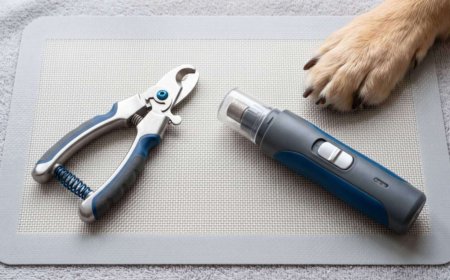
| 8–12 weeks | Eye hair blocking vision, paw hair causing slips on hard floors | Everything else - coat isn't developed enough to shape |
| 3–6 months | Eye/eyebrow hair, sanitary area, uneven ear fringe | Full-body shaping or breed-standard cuts |
| 6+ months | Adult coat routine begins; first real haircut if breed requires it | Attempting a complex breed cut yourself without first watching a professional do it |
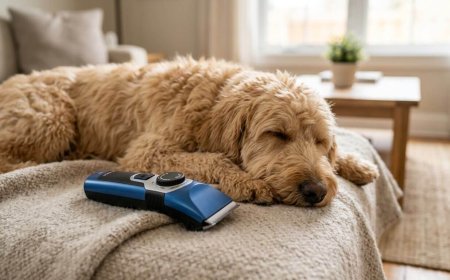
This is also a good window to introduce the sound and vibration of clippers on their lowest setting, well before you actually need to use them - the same gradual sound-desensitization approach from your puppy's early grooming routine applies here too.
Safe First Trims, Step by Step
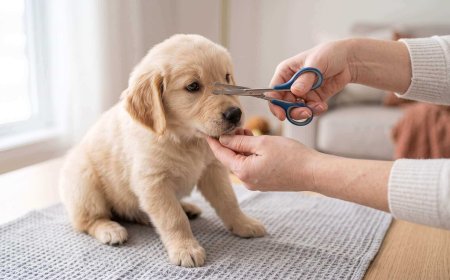
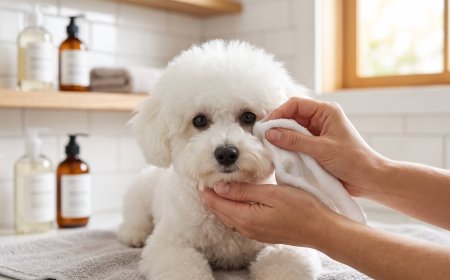
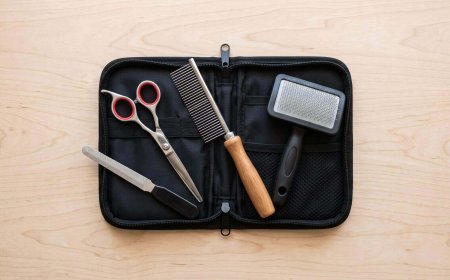
- Eye hair: Use round-tipped scissors made for pets, never straight human scissors. Lift the hair away from the eye between two fingers and snip only what's lifted clear - never trim close to the eye directly.
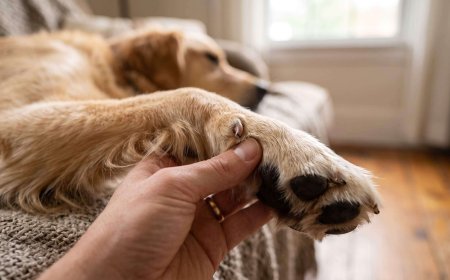
- Paw hair: With your puppy standing, gently spread the toes and trim only the hair extending past the pad. Stop immediately if your puppy pulls their paw away.
- Sanitary area: Trim a small amount at a time with your puppy standing, in short sessions rather than one long one.
- Ear fringe: Hold the ear flat and trim only the uneven, wispy ends, following the ear's natural line rather than cutting straight across.
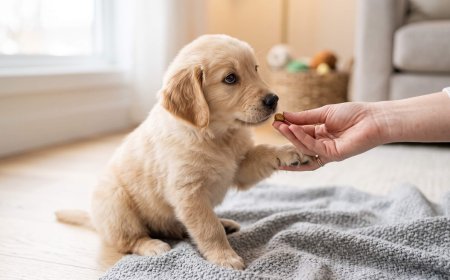
Safety Note: Never trim a puppy who is actively struggling or twisting away. Pause, offer a treat, and try again in a calmer moment - forcing a trim through resistance is how fear of grooming tools starts.
Mistakes to Avoid
- Attempting a full breed haircut too early. Before the adult coat comes in, there's often nothing solid to shape - the result is usually uneven and has to grow out anyway.
- Using human scissors instead of pet-specific ones. Human scissors are typically too sharp and straight-edged for a puppy's thin coat and soft skin, raising the risk of nicks.
- Rushing through discomfort. A puppy who learns that struggling ends the session will keep struggling. Calm, short sessions build the opposite habit.
When to Call In a Professional Groomer
Home trims are meant to stay small and practical. Bring in a professional groomer once:
- The adult coat has fully come in and a real breed-standard cut is needed.
- Matting has developed that can't be gently brushed or trimmed out at home.
- Your puppy is too anxious for you to safely trim, even with a slow, treat-based approach.
- You want to observe proper technique once before attempting a fuller trim yourself.
Frequently Asked Questions (FAQs)
What age can I trim my puppy's hair?
Light, practical trims around the eyes and paws can start as early as 8 to 12 weeks if needed for vision or footing. More general coat trimming is better left until 3 to 6 months, once your puppy is comfortable being handled.
Can I use regular scissors on my puppy?
No. Use blunt or round-tipped scissors made specifically for pets. They're safer around sensitive areas like the eyes and reduce the risk of injury if your puppy moves unexpectedly.
When should my puppy get their first professional haircut?
Once the adult coat starts coming in, usually around 6 months, though this varies by breed. A professional groomer is a good choice for this first real haircut, so you can observe their technique before trying it yourself at home.
My puppy won't sit still for trimming - what should I do?
Stop and shorten the session rather than pushing through. Pair every attempt with a treat and end on a calm moment, even if you've only managed a few seconds - the goal at this stage is building comfort, not finishing the trim in one sitting.