








How to Cut Dog Nails Without Clippers (Safe Alternative Methods)
Learn safe ways to trim your dog's nails without clippers, including nail grinders, files, and scratch boards, plus how to avoid the quick.
How to Cut Dog Nails Without Clippers (Safe Alternative Methods)
Not every dog tolerates clippers, and not every owner feels confident using them. If your dog panics at the sight of clippers, or you've had a bad experience cutting too close to the quick, there are genuinely effective ways to keep nails short without ever picking up a pair.
These alternatives work by wearing the nail down gradually instead of cutting it in one motion, which many anxious dogs tolerate far better. If you'd still like to compare traditional options first, see our best dog nail clippers for beginners guide.
Short answer: a rotary nail grinder is the fastest clipper-free option, a coarse pet nail file is the lowest-risk one, and a scratch board is the best long-term, low-stress one. Most dogs do best with a mix of two.
First, Know Where the Quick Is
Every method below is safer when you understand what you are avoiding. The quick is the living part of the nail, with blood vessels and nerves. Hit it and the nail will hurt and may bleed, which is the main reason dogs learn to fear nail care.
- Light or clear nails: the quick shows as a pink area inside the nail. Stay a couple of millimeters away from it.
- Dark or black nails: you can't see the quick, so go slowly. As you file or grind, watch the worn surface of the nail tip. A chalky white ring appears first; when a small dark or grey dot shows in the center, you are close to the quick and should stop.
- Overgrown nails: the quick grows longer along with the nail, so very long nails have to be shortened in small steps over several weeks, not all at once.
1. Rotary Nail Grinder (Dremel-Style)
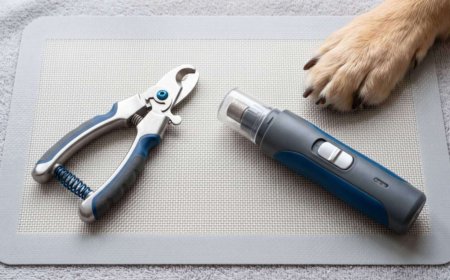
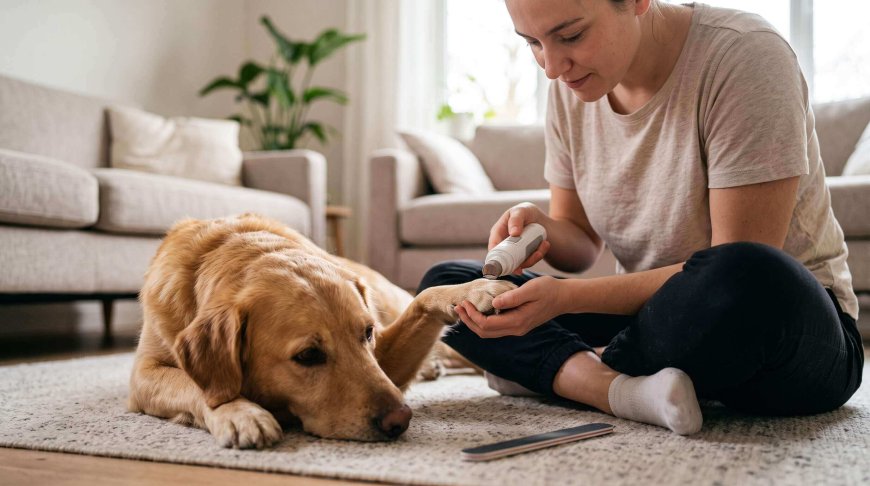
A pet nail grinder uses a small spinning sanding band to wear the nail down. It is the most popular clipper-free option because it is fast and leaves a smooth, rounded tip instead of a sharp edge.
How to Use One:
- Introduce the sound first. Turn the grinder on at a distance, reward your dog with a treat, and repeat over a few days before it ever touches a nail.
- Use the lowest speed setting and a fine-to-medium grit band (roughly 80 to 120 grit is typical).
- Hold the paw steady and keep long fur and dewclaw hair away from the spinning band so it can't catch.
- Touch the nail to the band for only one to two seconds at a time, then lift off. Constant contact builds heat, which is uncomfortable for the dog.
- Work in short passes on one nail, check the tip, and stop when you see the chalky ring or dark dot described above.
The learning curve is the noise and vibration, not the technique. If your dog is noise-sensitive, spend extra time on the desensitizing step, or choose a model advertised as quiet.
2. Nail Files and Emery Boards
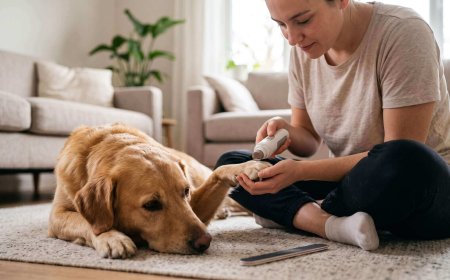
A pet-safe nail file is the lowest-risk option on this list. There is no motor and no blade, so there is nothing to cut the quick by accident, just gradual, controlled filing.
How to Use One:
- Hold the paw gently and steady it against your knee or a flat surface.
- File in one direction only, rather than sawing back and forth, across the tip of the nail.
- Stop every few strokes to check the nail's shape and length.
- Reward your dog with a treat after each paw to keep the session calm.
Filing takes longer than clipping, so plan on short, frequent sessions, such as a couple of nails per day. A dedicated pet file with a coarse surface works much better than a fine human emery board, which wears out quickly against thick dog nails.
3. Scratch Boards (DIY Nail Filing)
A scratch board uses your dog's natural scratching instinct to file their own nails. Once the behavior is learned, it is hands-off, and many dogs find it far less stressful than being held for a trim.
- What it is: a flat, rigid board covered with coarse sandpaper-style material, fixed firmly so it can't slide or flip.
- How it works: reward your dog for touching the board with a paw, then for a scratching motion. Over repeated short sessions, this wears the nail tips down.
- Best for: dogs who already dig or paw at surfaces, and owners willing to spend a few weeks training the behavior.
Keep in mind that a scratch board mostly works the front nails. Rear nails and dewclaws usually still need filing.
4. Natural Wear on Walking Surfaces
Dogs that walk regularly on pavement or other rough surfaces often wear their nails down on their own, which reduces how often any trimming method is needed.
Note: this works best as a supplement, not a replacement. Dewclaws and many rear nails rarely touch the ground enough to wear down. See our guide on trimming dog dewclaws safely for that area.
- Add a short daily walk on pavement if your dog spends most of the day on grass or carpet.
- Check nail length weekly instead of assuming walking is enough.
- Protect paw pads in extreme weather. Our guide on protecting dog paws from hot pavement and ice explains how to tell when a surface is too hot or cold.
5. Professional Grinding or Filing
If your dog's nails are very overgrown, or you are not comfortable doing this at home, a groomer or veterinary technician can grind or file the nails for you.
- Most groomers offer nail care as a standalone service, separate from a full grooming appointment.
- It is a good way to do a first "reset" on long nails, after which home maintenance is much easier.
- It also lets you watch a professional's technique before trying it yourself.
Comparing the Methods
| Method | Speed | Risk Level | Best For |
|---|---|---|---|
| Rotary Grinder | Fast | Low (heat and noise are the main concerns) | Dogs that tolerate sound; thick or dark nails |
| Nail File | Slow | Very Low | Nervous dogs, small dogs, first-time owners |
| Scratch Board | Gradual (ongoing) | Very Low | Dogs who already dig or scratch |
| Natural Wear | Gradual (ongoing) | Low | Active dogs walked on hard surfaces |
| Professional Service | Fast | Low (done by a professional) | Severely overgrown nails, first-time resets |
How Often Should You Do It?
As a general guide, most dogs need their nails tended every three to four weeks, and gradual methods like filing work best in short sessions every week. A simple check: if you can hear your dog's nails clicking on a hard floor, or the nails touch the ground when your dog stands normally, they are due. Dogs that walk a lot on pavement may need attention less often than dogs that mostly stay indoors.
What to Do If You Hit the Quick
It can happen with any method, so it helps to be ready.
- Stay calm. Dogs read your reaction, and a calm response keeps the experience from becoming a lasting fear.
- Apply styptic powder to the nail tip. If you don't have any, pressing a pinch of cornstarch or flour onto the nail also helps.
- Hold firm, steady pressure for a few minutes.
- If bleeding has not stopped after about ten minutes of firm pressure, call your veterinarian.
Keep styptic powder with your grooming supplies. Our best grooming kit for beginners guide covers what else is worth having on hand.
When to See a Vet
Home nail care is routine for most dogs, but some situations call for a professional:
- A nail that is split, cracked, or torn.
- Redness, swelling, discharge, or a bad smell around the nail bed.
- Limping, or a dog that reacts strongly to having a paw touched.
- A nail curling into the paw pad, which can happen with neglected nails and especially dewclaws.
If nails are so overgrown that the quick has grown very long, a vet or groomer can advise on a safe schedule to bring them back gradually. Our guide to cutting overgrown dog nails without making them bleed covers that process in detail.
Mistakes to Avoid
- Grinding or filing one spot too long. Short passes prevent heat buildup, and back-and-forth sawing can irritate the nail bed.
- Skipping checks because there is no blade. Gradual methods still need consistency. Nails get long just as easily without clippers.
- Forcing a scratch board. Let your dog build the habit with treats and patience instead of placing the paw yourself.
- Trying to do every nail in one session. Two or three nails with a reward is better than a stressful full set.
- Ignoring the dewclaws. They don't wear down and are the most common nails to be forgotten.
Frequently Asked Questions (FAQs)
Is filing actually effective, or just slower than clipping?
It is genuinely effective, just gradual. Regular short sessions keep nails at a healthy length. The difference from clipping is frequency, not results, so expect to file more often than you would clip.
Can I use a human nail file on my dog?
A dedicated pet file is better, since it is built for a dog's thicker nails and is easier to grip. A coarse emery board can work in a pinch, but avoid anything with sharp edges or a metal surface not designed for pets.
Is a Dremel or nail grinder safe for dogs?
Yes, when used correctly. Use a low speed, keep contact with the nail to one or two seconds at a time, and keep fur away from the band. The main risks are heat from constant contact and a dog that is frightened by the noise, both of which you can manage with short passes and gradual introduction.
How long does it take to train a dog to use a scratch board?
Many dogs pick it up within a few weeks of short, treat-rewarded sessions, though it varies by dog. Patience matters more than speed here.
My dog's nails are very overgrown. Where should I start?
A professional filing or grinding session is the safest starting point. Once nails are back to a healthy length, home filing or a scratch board is much easier to maintain.
Final Thoughts
You don't need clippers to keep your dog's nails healthy. Choose the method your dog tolerates best, keep sessions short and rewarding, and be consistent. For the bigger picture on keeping your dog clean and comfortable, start with our step-by-step guide to grooming a dog at home.
This article is general information for dog owners and is not a substitute for advice from your veterinarian.